
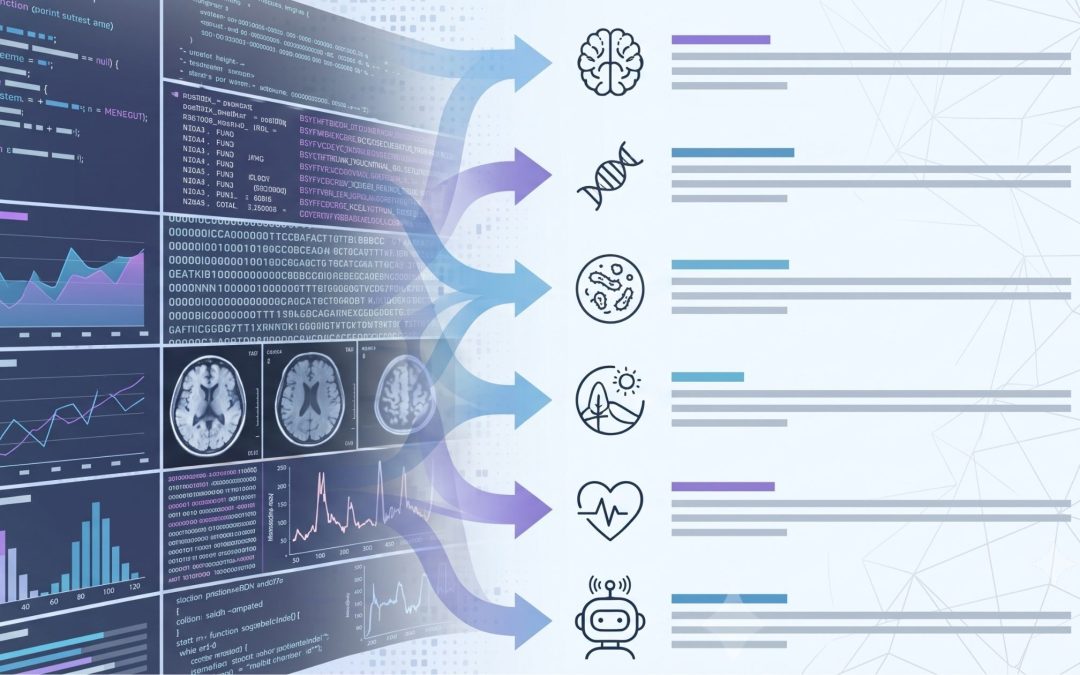
A rapidly evolving scientific landscape
Looking at the papers shaping medicine today, it is clear how rapidly the scientific landscape is evolving—and how interconnected it has become.
Across journals, conferences, and regulatory submissions, we are witnessing remarkable advances unfolding simultaneously across multiple therapeutic areas.
Key areas of progress
- Earlier diagnosis and new therapies in neurodegenerative diseases.
- A new era of metabolic medicine, where obesity treatments are increasingly linked to cardiovascular, renal, and hepatic outcomes.
- Precision oncology moving further into true individualisation through biomarkers, liquid biopsies, and adaptive treatment strategies.
- The microbiome transitioning from an intriguing biological system to a source of genuine therapeutic interventions.
- Climate change increasingly recognised not only as an environmental issue, but as a direct driver of health outcomes.
- A growing focus on women’s health, addressing long-standing gaps in evidence and understanding.
- Artificial intelligence—no longer just a writing aid, but a rapidly embedded technology across research, diagnostics, and healthcare delivery.
An increasingly interconnected scientific landscape
What stands out is not only the pace of progress within each field, but the way these fields now overlap. Metabolic disease is tied to cardiovascular risk and neurology. Oncology is increasingly shaped by immunology, genomics, and data science. Even environmental health now intersects with infectious disease, chronic conditions, and health systems research.
Medicine is no longer a collection of separate specialties moving in parallel. It is becoming a tightly interconnected system of evidence.
Implications for scientific and medical writing
This shift has important implications for how science is communicated.
Each paper, clinical trial, or regulatory document is still built on the same foundation: the deep, specialised expertise of researchers, clinicians, statisticians, and study teams who understand their field in exceptional detail. Their role remains essential in ensuring scientific rigour, precision, and validity.
However, as the body of evidence expands and becomes more multidimensional, another need becomes increasingly apparent: the need to connect.
This is where scientific and medical writers come in—not as a replacement for expertise, and not as passive translators of information, but as professionals who help shape understanding across boundaries. Writers are often positioned at the intersection of multiple disciplines, each with its own language, assumptions, and priorities. In that space, the task is not simply to summarise findings, but to recognise relationships between them—sometimes across studies, sometimes across therapeutic areas, and sometimes across entirely different fields of medicine.
Shaping the bigger picture in scientific communication
The value of this perspective lies in seeing beyond the individual dataset or manuscript. In this sense, the role of the medical writer is increasingly about narrative—not in the sense of storytelling for its own sake, but in the sense of constructing coherence in an increasingly complex and interconnected body of scientific evidence.